
What Is a Court Docket in Oakland County
A docket is the running schedule of events in a single case. In Michigan courts it usually appears as the register of actions, a dated list of every filing, hearing, motion, and order. Each line marks something that happened on the case. Read top to bottom, the docket tells the story of the case without opening a single document. It shows when the case opened, who filed what, when the court met, and how the judge ruled.
The docket is narrower than the full case file. It lists the events, while the file holds the actual pleadings, exhibits, and signed orders behind them. Circuit Court dockets, district court dockets, and probate dockets all follow this pattern, though each court publishes them through its own system. A few core terms appear on almost every Oakland County docket.
- Register of actions
- The chronological docket or event list for a case.
- Docket
- The case schedule or record of case events.
- Motion
- A written request asking the court for an order.
- Order
- A judge's directive that resolves a request or issue.
- Disposition
- The outcome of a charge or the case as a whole.
How to Find Oakland County Court Dockets Online
The right tool depends on the court. For a Sixth Judicial Circuit case, Court Explorer shows primary party information and the register of actions, and it lets users order copies of filed documents. For a district case, MiCOURT Case Search displays court, party, case, and event data for participating courts. For a probate case, Probate Access provides free, name-based case status, and the Probate Court's online services page adds Judicial Schedule Online, where users check hearing schedules by date and by judge or bar number.
Each portal starts from a party name or a case number. Court Explorer and MiCOURT both accept a name search or a case-number search. Probate Access is name-based, and a case number is needed later to order copies. The steps below outline a typical docket lookup.
- Open Court Explorer for a Circuit case, MiCOURT for a district case, or Probate Access for a probate case.
- Pick a search by party name or by case number.
- Enter the name as it appears in the case, or type the full case number.
- Open the case and review the register of actions from the earliest entry down.
Sample Oakland County Docket Entry
Each docket line packs several pieces of information into one row. Once the columns make sense, a reader can scan a long register of actions quickly and spot the moment a motion was filed or a judgment entered. The table below breaks a typical register-of-actions entry into its parts.
| Field | What It Shows |
|---|---|
| Entry Date | The date the filing or event was recorded on the case. |
| Event Type | What happened, such as a motion, hearing, order, or judgment. |
| Filed By | The party or attorney who submitted the filing. |
| Description | A short title for the document or action, such as a motion name. |
| Hearing Date | Any scheduled or completed court appearance tied to the entry. |
| Result or Order | How the court ruled, or the disposition entered on the matter. |
Note: Not every court exposes a clickable document behind each entry, because Michigan court rules limit public internet access to filed document images.
Courts That Publish Oakland County Dockets
Michigan's trial system runs three main courts, and each keeps its own dockets. The Sixth Judicial Circuit Court handles felonies after bindover, larger civil cases, and family matters, and its public dockets flow through Court Explorer. District courts handle misdemeanors, traffic, civil infractions, small claims, and landlord-tenant cases, and many of those dockets appear in MiCOURT or through the local district court. The Probate Court keeps estate, guardianship, and conservatorship dockets, searchable by name in Probate Access. The main docket sources break down like this.
- Sixth Judicial Circuit Court, through Court Explorer for civil, domestic, business, and felony criminal cases.
- Oakland County district courts, through MiCOURT or the individual court for tickets, misdemeanors, and civil matters.
- Oakland County Probate Court, through Probate Access for estate, guardianship, and conservatorship case status.
- Judicial Schedule Online, for probate hearing schedules by date and by judge or bar number.
Because Oakland's district courts sit in different cities, a searcher who knows the citation or case came from a specific district should confirm that court's own tools if MiCOURT does not show the docket.
Oakland County Dockets vs. Full Case Records
A docket and a case file answer different questions. The docket tells a reader what happened and when. The full case record holds the documents that prove it, such as the complaint, motions, exhibits, and signed orders. Court Explorer bridges the two by listing the register of actions and letting a user order copies of the documents behind it. For the complete file behind a docket line, the Oakland County court records path leads to counter and copy requests.
| Docket | Full Case Record | |
|---|---|---|
| Format | List of dated entries | Full documents and exhibits |
| Access | Often online and free | May require a copy fee or a court visit |
| Use | Track case progress and dates | Legal review, evidence, certified copies |
| Source | Court Explorer, MiCOURT, Probate Access | Legal Records, district clerk, Probate Court |
Online status is not the official record. Court Explorer states plainly that its information is not the official record and should not be used for a criminal background check.
Federal Court Dockets for Oakland County Cases
Some Oakland County cases are federal, not state. Federal criminal and civil matters from the county fall in the U.S. District Court for the Eastern District of Michigan, whose Southern Division includes Oakland County. For many residents, the nearest staffed federal courthouse is the Theodore Levin U.S. Courthouse in Detroit, though the district also sits in Ann Arbor, Bay City, Flint, and Port Huron. Federal dockets do not appear in Court Explorer or MiCOURT. They run through a separate national system.
That system is PACER, the federal judiciary's electronic public access service for appellate, district, and bankruptcy case and docket information.
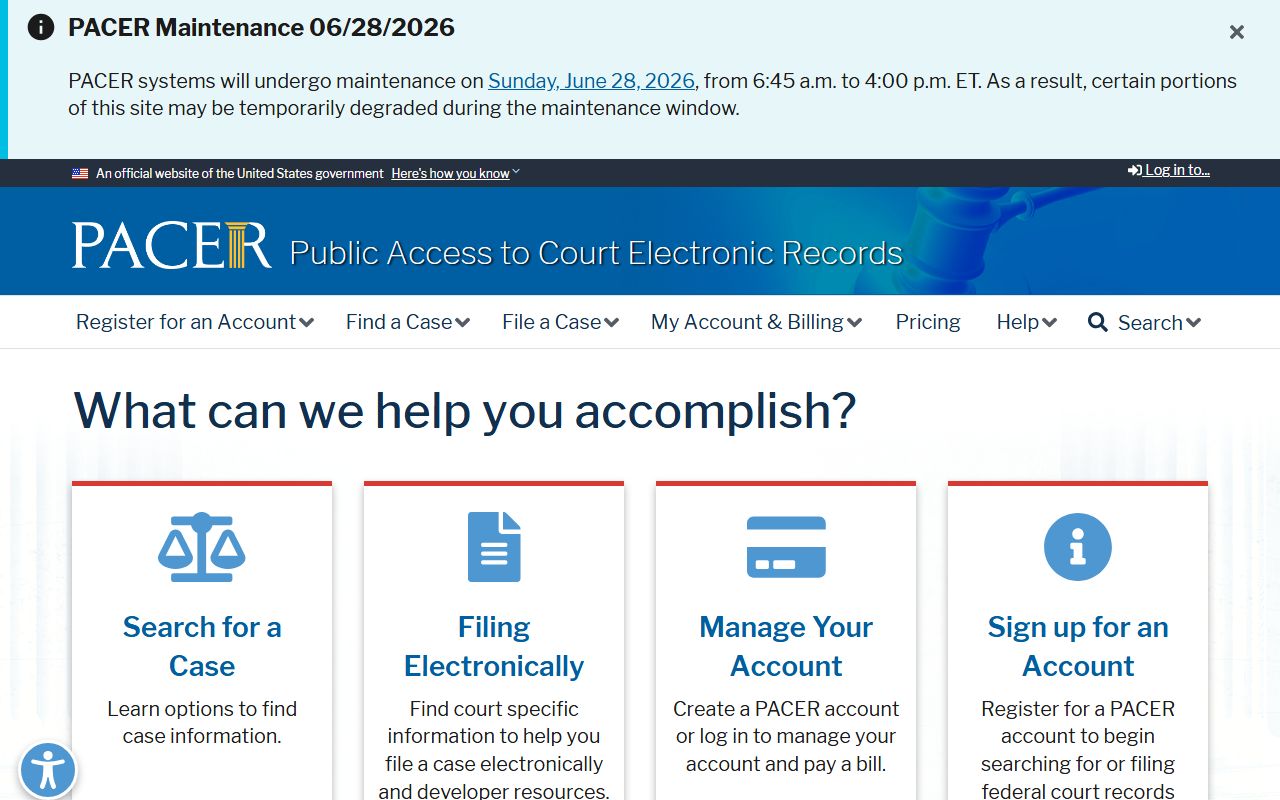
PACER pulls its dockets from each court's CM/ECF filing system, so a searcher registers once and then reaches district, bankruptcy, and appellate records across the country.
Bankruptcy cases follow their own track through the U.S. Bankruptcy Court for the Eastern District of Michigan, which serves Oakland County filers from its Detroit location.
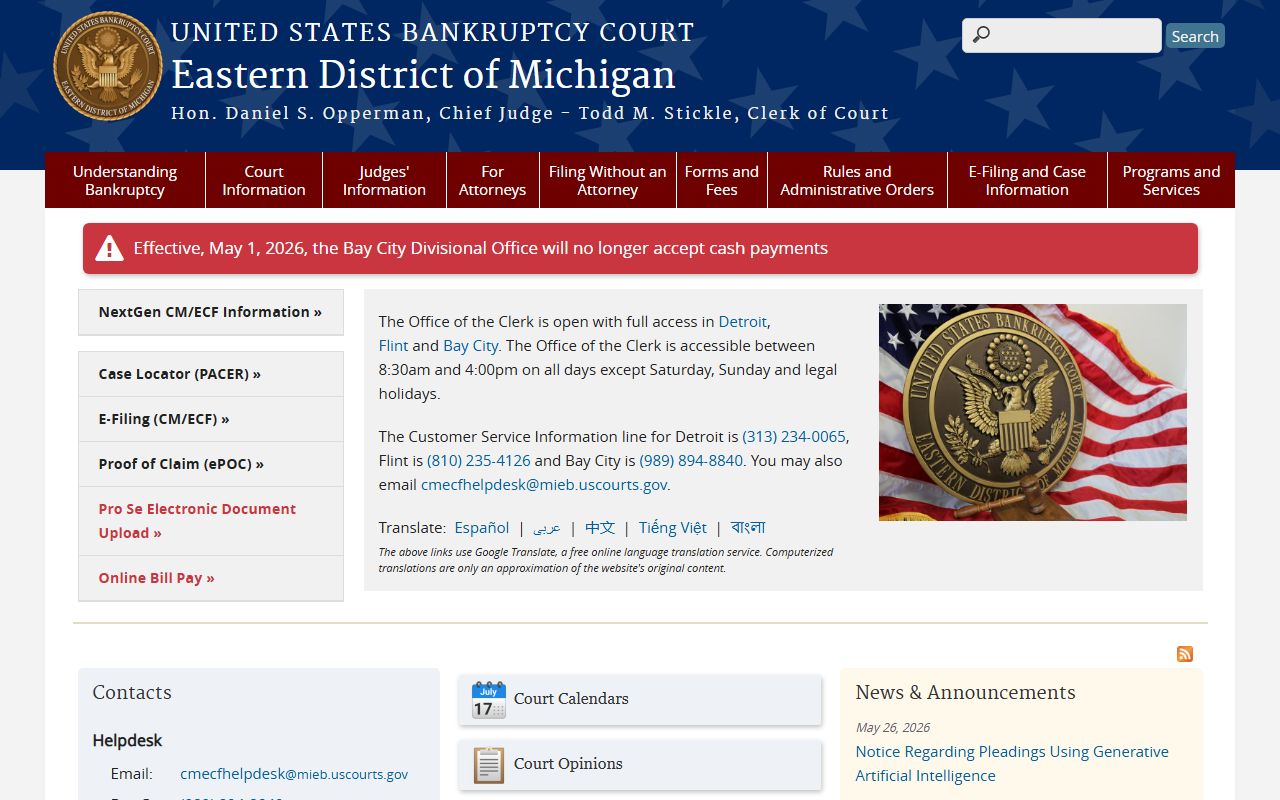
Bankruptcy dockets list petitions, creditor filings, hearings, and orders, and they are reached through the same PACER login used for district cases.
On the prosecution side, the U.S. Attorney's Office for the Eastern District of Michigan handles federal criminal charges across 34 counties in the eastern Lower Peninsula, Oakland County among them.
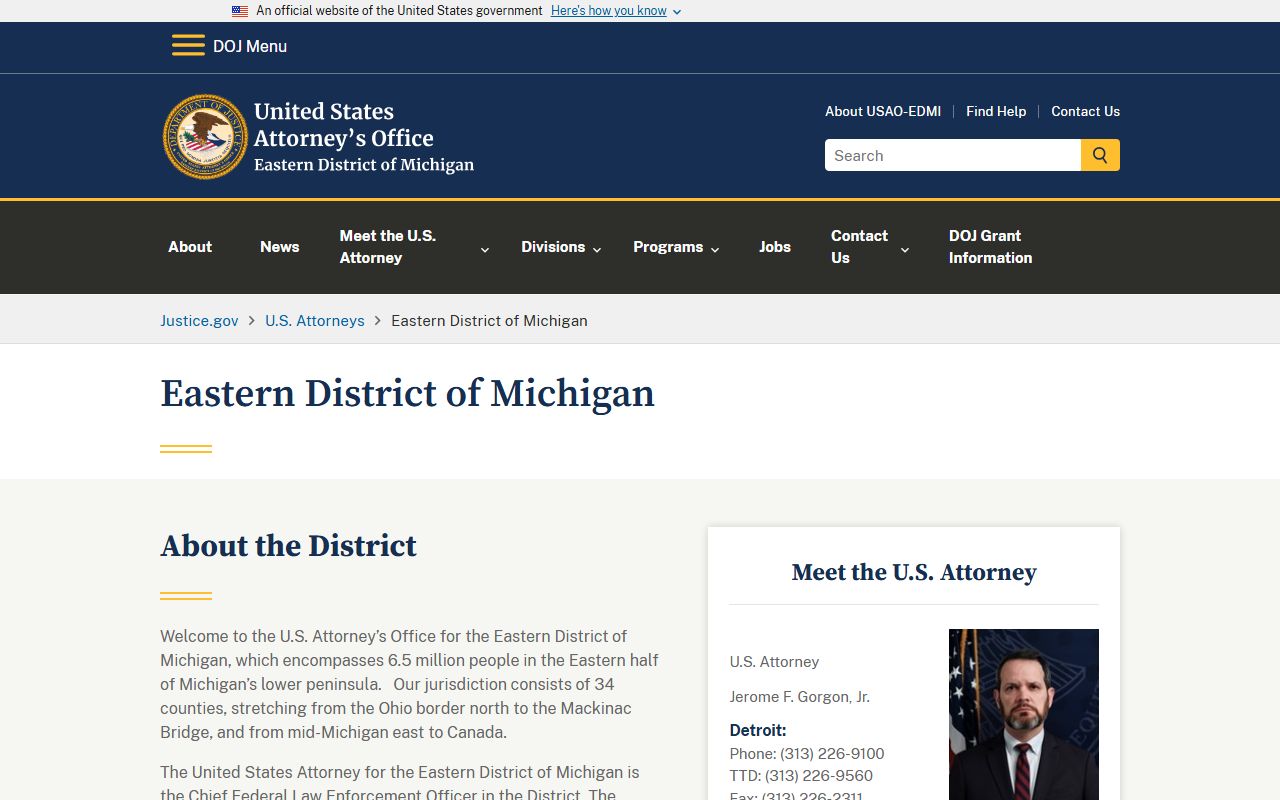
The office announces charges and case outcomes, but the docket itself still lives in the federal court file reached through PACER.
Custody after a federal conviction is tracked apart from any court docket, through the Federal Bureau of Prisons inmate locator.
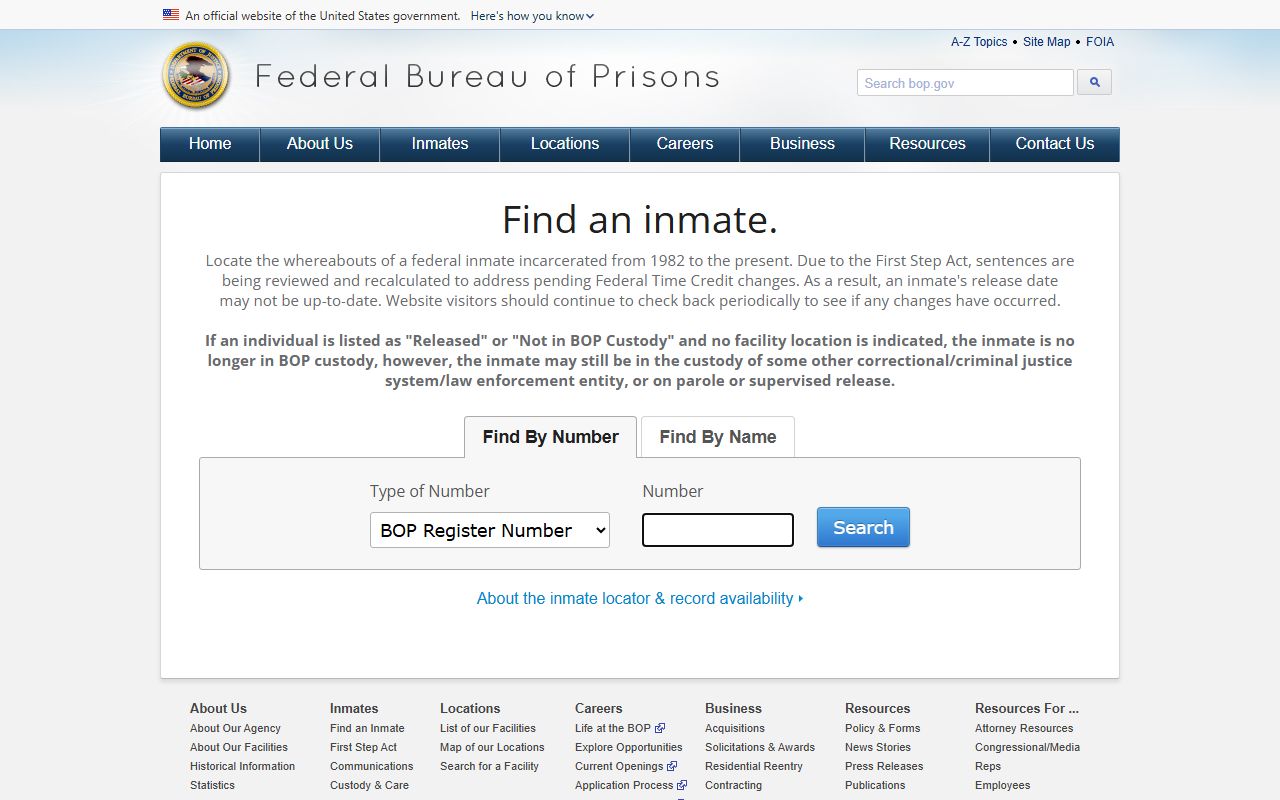
The locator covers federal inmates held from 1982 to the present and warns that release dates can change as sentences are recalculated under federal law.
How to Read an Oakland County Docket
Docket entries move in plain time order, and most read cleanly once the shorthand is clear. A motion is a written request. An order is the judge's ruling on that request. A disposition marks the outcome, while a judgment is a final, enforceable decision. In a criminal case, the docket often runs from arraignment through plea or trial to sentencing, and in a civil case it runs from the complaint through motions to judgment.
Timing and currency matter as much as the words. Probate Access shows historical and current status information, not the official court record, and it can lag behind the file. The court cautions that a name match is not proof of identity and that some information stays nonpublic. The Sixth Judicial Circuit Court and the Probate Court remain the authorities on any entry that carries legal weight.
Is the register of actions the same as a docket? Yes, in practice. Court Explorer labels a case's dated event list the register of actions. It records each filing, hearing, motion, and order in the sequence the court entered it. Reading it from the top down shows how a case moved from its first filing to its latest step.
How do I find a future hearing date in probate? Use Judicial Schedule Online, a Probate Court tool that lists hearings by date and by judge or bar number. It shows when a matter is set, while Probate Access shows the case status behind it. For a hearing that carries a deadline, confirm the date with the court before you rely on it.
Can I read a full district-court docket online? Sometimes. Many Oakland district cases appear in MiCOURT, but the categories shown vary by court. When a district docket does not load, the local court that handled the ticket or misdemeanor can confirm the entries and any upcoming date by phone or at the counter.
Important: Delays in entering case information can occur, so confirm any date or disposition with the court itself before relying on an online docket for a legal deadline.