
Checking Oakland County Warrants
Warrant research in Oakland County has three different meanings. The first is active fugitive information held by the Sheriff's Office. The second is a court warrant, such as a bench warrant or a complaint warrant, sitting inside a district or circuit court case file. The third is the warrant authorization step the county Prosecutor handles before charges are ever filed. Each meaning points to a different office. Each one is checked in a different way.
The county does not run one full online active-warrant database. The Sheriff posts a short Most Wanted list, not a searchable roster of every open warrant. So the practical route is a fallback chain. Start with the Sheriff for fugitives. Move to the issuing court for bench and complaint warrants. Ask the Prosecutor about charging decisions. Public case portals can then confirm warrant, bond, and arraignment entries when a case is open to the public.
This split exists because warrants are created and stored by separate branches. Law enforcement seeks and serves them. Courts issue and hold them in case files. The Prosecutor authorizes the charging documents that begin many of them. A single name may show up in one system and not another, so more than one check is often wise.
Where to Find Oakland County Warrant Information
The Oakland County Sheriff's Office is the starting point for fugitive warrants. Sheriff Michael J. Bouchard leads the largest full-service sheriff's office in Michigan. Its public Most Wanted page names people described as among the most wanted felons in the county. That page is not a complete warrant index. It highlights select fugitives and asks the public for tips that help find them.
The Sheriff publishes photos and case details of tracked fugitives on the official Oakland County Most Wanted fugitives page.
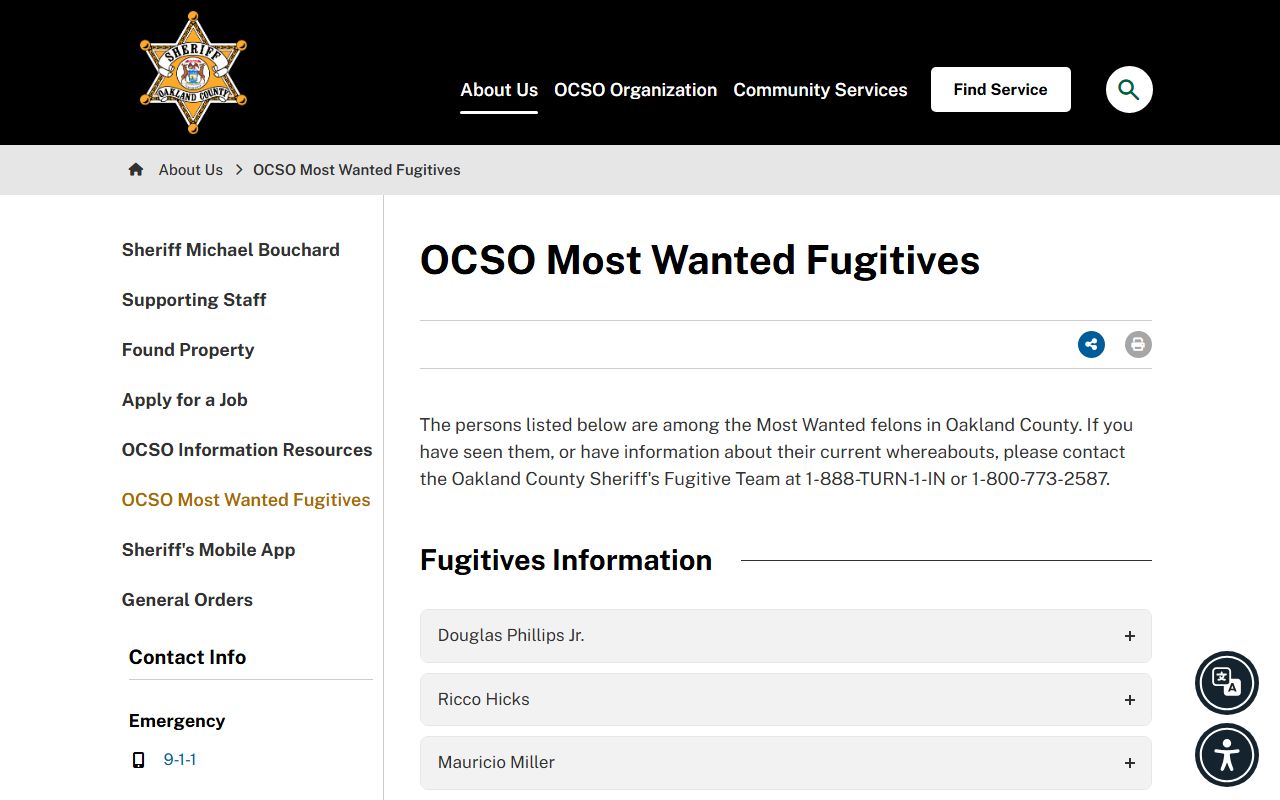
Anyone who recognizes a listed person can pass information straight to the Fugitive Team, which stays busy year round. In 2025 the team picked up 353 fugitives on outstanding warrants and processed 61 extraditions. Tips reach the team at 1-888-TURN-1-IN or 1-800-773-2587. General Sheriff questions go to 248-858-5000.
For court warrants, the venue that issued the warrant is the best source. District courts hold most bench warrants for missed traffic, misdemeanor, civil infraction, probation, or preliminary-exam appearances. The main access points break down like this.
- Sheriff Most Wanted page - select fugitives only, not a full warrant list.
- Fugitive Team tip lines - 1-888-TURN-1-IN or 1-800-773-2587.
- Sheriff general information - 248-858-5000 for public safety questions.
- District court clerk - bench warrants and failure-to-appear matters in the issuing court.
- Court Explorer or MiCOURT - case dockets for warrant, bond, and arraignment entries when public.
- Prosecutor Warrants Division - the office that authorizes a complaint and warrant after police investigation.
The Fugitive Team and the general Sheriff line share the county campus, so a single contact card covers both public routes.
Sheriff Fugitive Team
Oakland County Sheriff's Office
1200 N. Telegraph Road, Building 38E
Pontiac, MI 48341
Tips: 1-888-TURN-1-IN or 1-800-773-2587
General: 248-858-5000
Types of Warrants in Oakland County
Not every warrant means the same thing. The label on a warrant tells you what triggered it and which office to approach. Some follow a criminal charge. Others follow a missed court date. A few authorize a search rather than an arrest. Sorting the type first makes the rest of the search faster.
| Warrant Type | What It Means | Where It Comes From |
|---|---|---|
| Arrest warrant | Authorizes police to take a named person into custody. | Judge or magistrate, on a sworn complaint. |
| Bench warrant | Issued after a missed hearing or noncompliance with a court order. | District or circuit court judge. |
| Complaint warrant | Filed with a district court once charges are authorized. | Prosecutor Warrants Division, then the court. |
| Search warrant | Allows a search of a place or property for evidence. | Judge or magistrate, on probable cause. |
| Capias / failure to appear | Directs a person be brought to court after skipping a required appearance. | The court handling the underlying case. |
Bench warrants are common in the district courts because that is where traffic tickets, civil infractions, and misdemeanors are heard. A felony often begins as a complaint warrant filed after prosecutor review, which then routes to a district-court arraignment before any bindover to circuit court.
How to Search Oakland County Court Dockets for Warrants
When a warrant lives in a court case, the case docket is the place to look. The county runs Court Explorer for Sixth Judicial Circuit public records, and the state runs MiCOURT Case Search for many district and probate courts. Warrant, bond, arraignment, and hearing entries can appear in the register of actions when a case is public. Neither portal is the official record, and neither is meant for a formal background check.
- Open Court Explorer for Sixth Circuit cases, or MiCOURT Case Search for district and probate courts.
- Search by party name or by case number if a ticket, notice, or pleading lists one.
- Open the register of actions and scan for warrant, bond, or arraignment entries.
- Confirm anything you find with the clerk of the court that issued it, since online status can lag.
The Court Explorer search screen keeps its fields simple. The county confirms name and case-number searching, with document ordering handled inside the portal workflow.
| Field Label | Type | Required | Notes |
|---|---|---|---|
| Name | Text | Unspecified | Use the party name as it appears in the case. |
| Case Number | Text | Unspecified | Useful when known from a notice, pleading, or docket letter. |
| Document order controls | Portal action | Optional | Copy purchases depend on the portal workflow. |
| Search buttons | Button | N/A | Navigation and search controls run inside the secured portal. |
For district cases, searching the specific local court matters because tickets, misdemeanors, and preliminary felony proceedings often sit in a numbered district court rather than in circuit court.
Note: Court Explorer and MiCOURT show public case status only and should never be treated as a criminal background check or the official court file.
The Oakland County Prosecutor Warrants Division
Many warrants begin at the Oakland County Prosecutor's Office, led by Prosecutor Karen D. McDonald. The office runs a dedicated Warrants Division that handles intake and charging. Police first make a report to the law-enforcement agency where the crime occurred. After investigation, that agency presents the case to the Warrants Division for review.
Assistant prosecutors then decide whether criminal charges are appropriate. If they are, the division authorizes a complaint and warrant to be filed with the relevant district court. The division also initiates extraditions and detainer actions for defendants held in other states or in federal custody. It is a charging office, not a public background-check desk, so it does not run open warrant lookups for the general public.
The Warrants Division is led by Chief Rob VanWert, who can be reached at 248-858-5556 or vanwertr@oakgov.com. Questions about whether charges were authorized in a specific matter belong here, while questions about serving or clearing a warrant belong with the Sheriff or the issuing court. Records of the charges once filed then live in the county Oakland County criminal court records for the case.
What an Oakland County Warrant Record Shows
A warrant entry inside a court case file carries a predictable set of details. The exact fields visible to the public depend on the court and the case type. When a warrant appears in a register of actions or a court notice, expect the core identifiers below rather than a full narrative.
| Field | What It Shows |
|---|---|
| Defendant Name | The person the warrant names, as recorded in the case. |
| Warrant Type | Whether it is an arrest, bench, complaint, or capias warrant. |
| Issue Date | The date the judge or magistrate signed the warrant. |
| Charge | The offense or the reason for the warrant, such as failure to appear. |
| Bond Amount | Any bond set for release, when the court has fixed one. |
| Issuing Court | The district or circuit court that ordered the warrant. |
| Status | Whether the warrant is outstanding, recalled, or served. |
A Most Wanted fugitive listing looks different. It leans on a photo, physical description, and the charge behind the search, since its purpose is to help the public identify and report the person rather than to document a case docket.
What to Do About an Outstanding Oakland County Warrant
An open warrant does not go away on its own. It can lead to arrest during a routine stop and can block release from jail later. The safest path is to identify the issuing court or agency and address the warrant on your own terms. Third-party warrant websites are not reliable and should not replace a call to the actual court.
- Identify the court or agency that issued the warrant, using a ticket, notice, or a docket entry.
- Call the court clerk, or speak with an attorney first if bond or safety questions exist.
- For a district-court bench warrant, ask about walk-in arraignment, payment, bond, or a hearing reset.
- For a felony complaint warrant, expect a district-court arraignment and possible jail booking.
- Bring government photo identification and the case or ticket number to any appearance.
- Clear related holds, warrants, or detainers, because jail release includes a LEIN check.
Some courts make this easier with set walk-in times. The 52-3 District Court in Rochester Hills posts walk-in arraignment hours Monday through Friday from 9:00 to 10:30 a.m. and from 1:00 to 3:00 p.m. Anyone using those hours must check in at the Clerk's Office before going to any courtroom. A felony complaint warrant can send a person to the Oakland County Jail for booking before the first hearing, so planning ahead matters.
Important: Talk with a lawyer before turning yourself in on a warrant, especially where a bond amount, a felony charge, or a possible hold could affect release.
Oakland County Sheriff App for Warrants and Tips
The Sheriff's Office runs an official mobile app that puts fugitive and tip tools in one place. The app carries a list of Most Wanted offenders, public safety alerts, critical warnings, and inmate and offender information. Its standout feature for warrant work is anonymous tip submission that can attach a photo, a video, and GPS location, which the regular website does not offer as smoothly.
Details and download links sit on the county's official Oakland County Sheriff mobile app page.
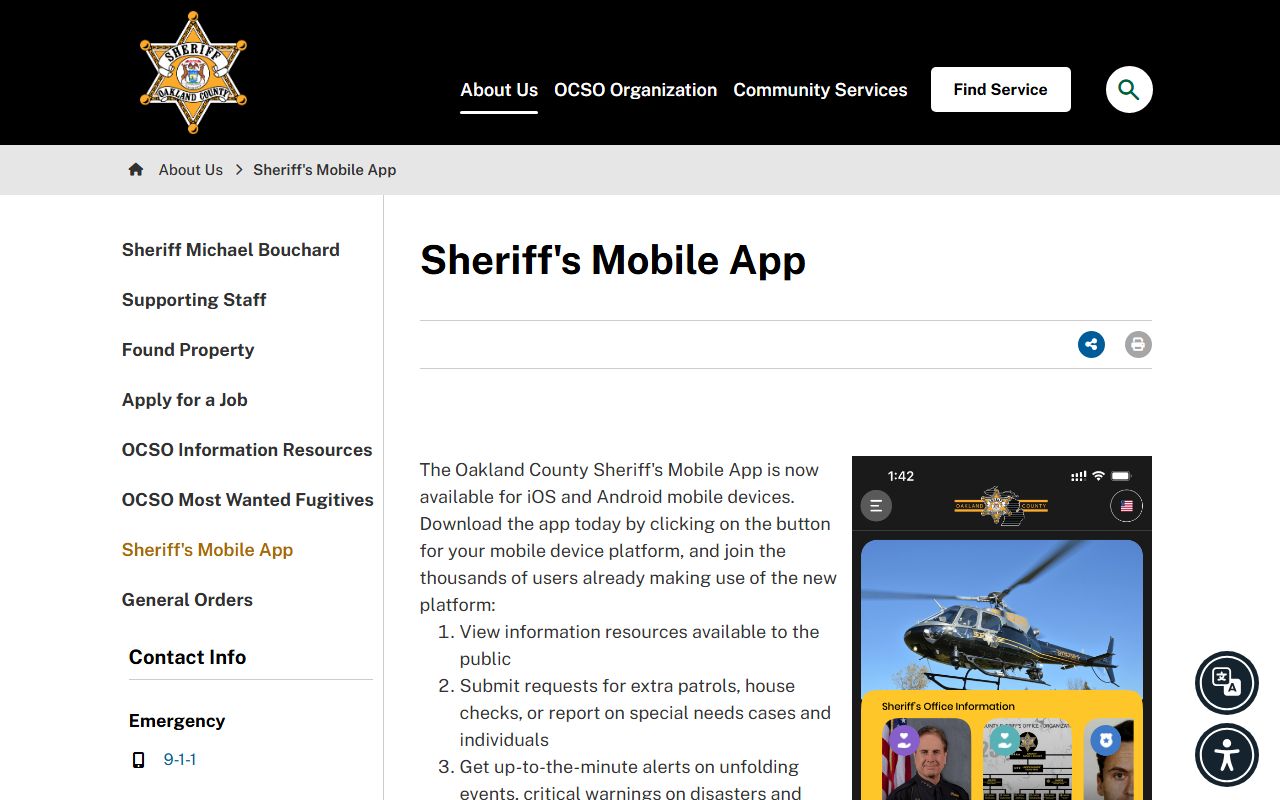
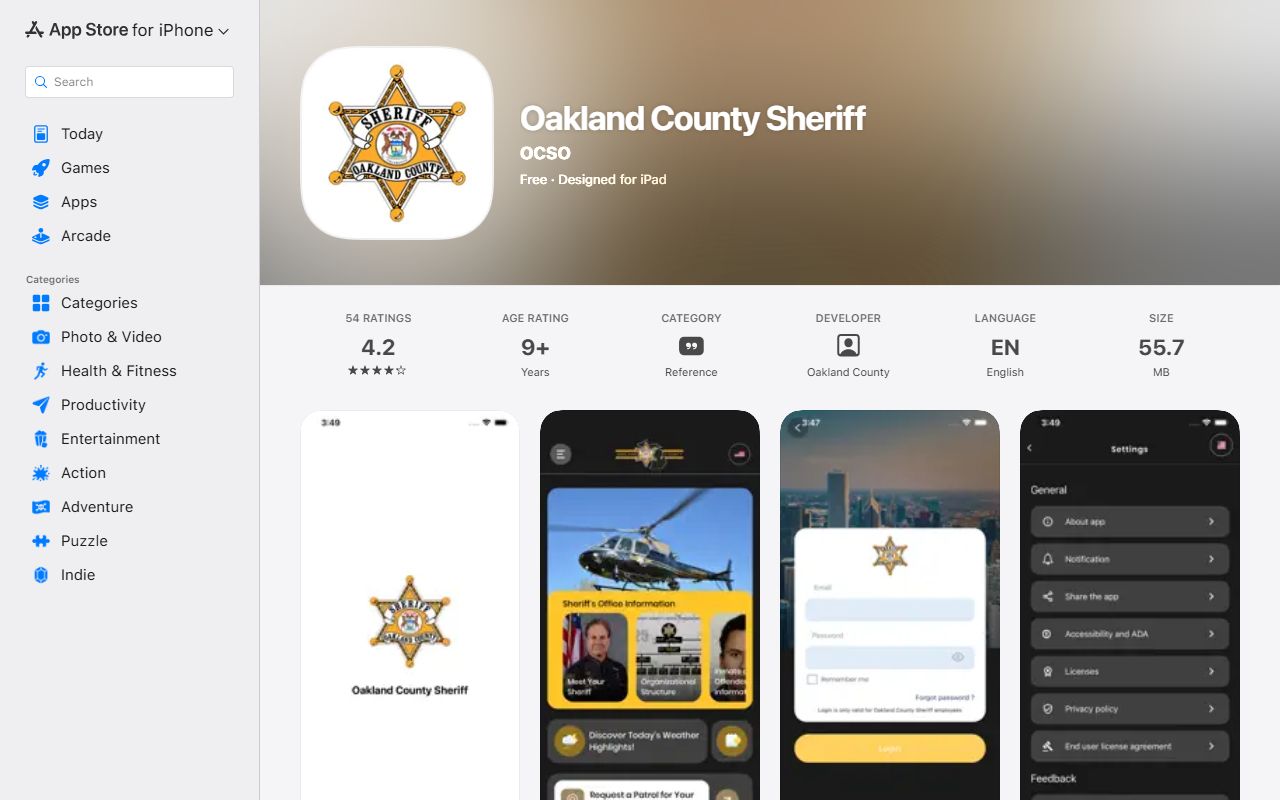
The app is free on both major platforms and updates its Most Wanted content and alerts in real time. Apple users can install it from the Oakland County Sheriff iOS app listing.
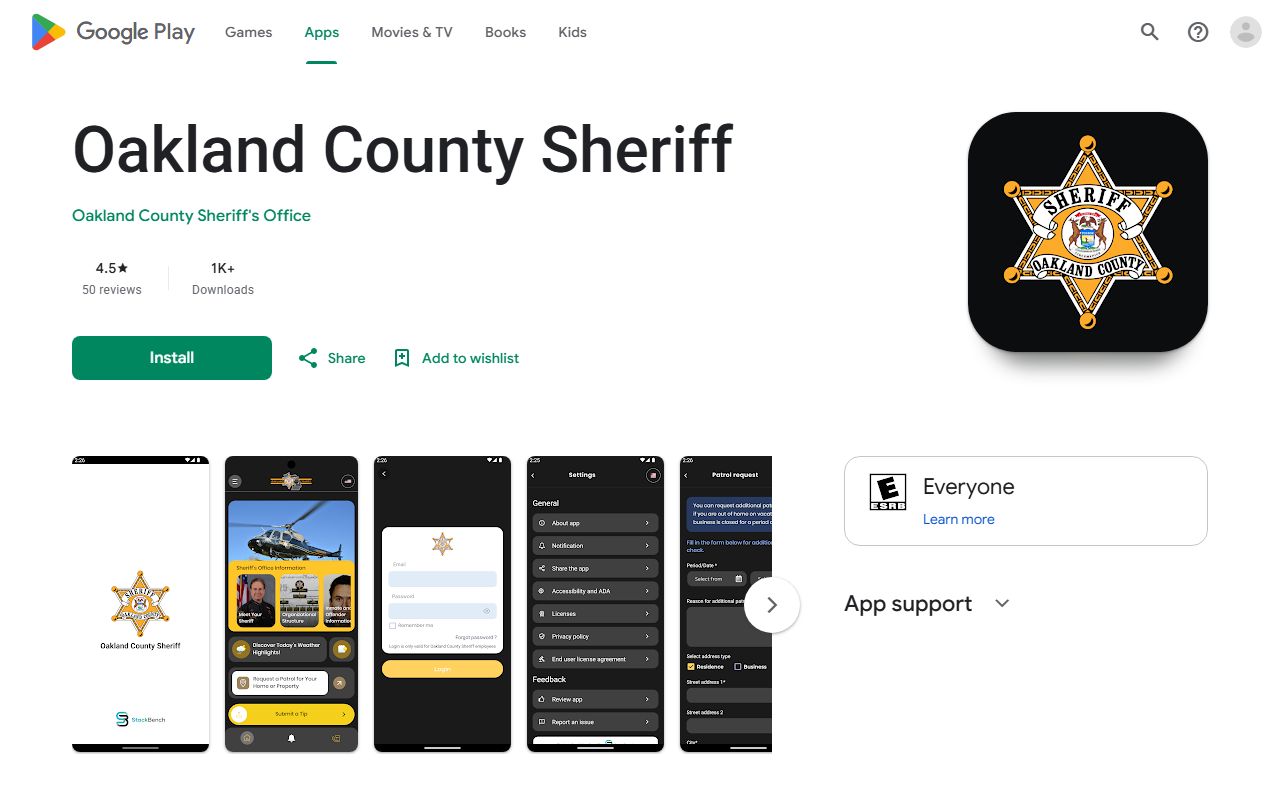
The same tools are available for Android phones, including push alerts and the anonymous tip form. Android users can download it from the Google Play listing for the Oakland County Sheriff app.
Tips sent through the app reach the same Fugitive Team that works the Most Wanted list, so a phone report and an app report land in the same place.
Restricted Oakland County Warrant Records
Not all warrant information is public. Some warrants stay sealed until they are served, so that a person does not learn of the search in advance. Juvenile matters carry their own confidentiality, and many are not open to a general public search. Personal Protection Order files are excluded from Court Explorer, and probate mental health records are treated as nonpublic.
Federal warrants are separate from county and district court warrants and are handled through federal courts and the U.S. Marshals rather than the county Sheriff. A conviction that is later set aside under Michigan law becomes nonpublic for most public-facing searches, though courts and law enforcement keep access as the statute allows.
Because of these limits, an empty result does not always mean no warrant exists. When public tools show nothing but a real question remains, the reliable answer comes from calling the court clerk or the Sheriff directly and confirming with the office that actually holds the record.
Note: Sealed, juvenile, and federal warrants may never appear in county online tools, so direct contact with the issuing office is the only sure check.