
How to Search Oakland County Traffic Court Records
Traffic cases in Oakland County are generally district-court matters. The court that hears a ticket is the district court for the city or area where the citation was written. Because of that, the first step is to read the ticket. It names the issuing court, the violation, and a due date. Once the court is known, there are three practical online paths. Local district courts post their own payment and hearing tools. MiCOURT Case Search covers participating Michigan courts. The 52nd District Court runs a dedicated payment portal for eligible tickets.
Have a few details ready before starting. The citation number speeds up any lookup. A driver name, license number, and date of birth help confirm the right person and case. Statewide district records can be checked through MiCOURT Case Search, where the case categories shown vary by the court that is searched. If a case does not appear online, the district-court clerk that handled the ticket can pull the file.
- Read the ticket and note the issuing district court, the citation number, and the due date.
- Open the district court's payment or hearing tool, or search by court in MiCOURT.
- Enter the citation number, or search by driver name and date of birth.
- Review the charge, hearing date, disposition, and any fine or cost.
- Pay online if eligible, request a hearing, or contact the clerk for a certified copy.
Which Courts Handle Traffic Cases in Oakland County
Oakland County has a wide district-court network, and traffic venue depends on where the stop happened. The county directory lists district courts serving Ferndale, Hazel Park, Madison Heights, Royal Oak, Oak Park, Southfield, Farmington Hills, Bloomfield Hills, Pontiac, and Waterford. The 52nd District Court adds four divisions across the northern and western county. Those divisions are 52-1 in Novi, 52-2 in Clarkston, 52-3 in Rochester Hills, and 52-4 in Troy.
Each district court handles the tickets, civil infractions, and misdemeanor traffic offenses written in its area. Circuit Court enters the picture only when a serious felony traffic matter is bound over after a district-court preliminary examination. For most drivers, the district court on the ticket is the whole story. The table below lists several divisions with the type of work they take and, where research confirms it, a location.
| Court | Traffic Cases Handled | Location |
|---|---|---|
| 52-1 District Court | Civil infractions, traffic misdemeanors, payments, hearing requests | 48150 Grand River Ave, Novi, MI 48374 |
| 52-2 District Court | Civil infractions, traffic misdemeanors, online payment and hearings | 5850 Lorac Drive, Clarkston, MI 48346 |
| 52-3 District Court | Traffic tickets, walk-in arraignments, online payment | Rochester Hills; criminal division 248-853-5553 |
| 52-4 District Court | Civil, criminal, traffic, probation, payment drop box | Troy |
| 50th District Court | Traffic and criminal matters in Pontiac | Pontiac; 248-758-3800 |
Note: District-court hours and rules vary by division, so confirm details with the specific Oakland County court named on the ticket before mailing or visiting.
Types of Traffic Cases in Oakland County Records
Not every ticket carries the same weight. Michigan traffic law splits offenses into civil infractions and misdemeanors, and the court file reflects that split. A civil infraction is not a crime, but it still creates a court record with a fine and possible license points. Misdemeanor traffic offenses are criminal and can lead to probation or jail. Oakland County district courts also handle non-moving and equipment violations. The categories below appear most often across county traffic records.
- Moving violations - speeding, careless driving, and signal offenses that carry a fine and state points.
- Non-moving and equipment - parking, registration, and vehicle-condition tickets with lower penalties.
- Misdemeanor traffic - suspended-license driving and similar offenses handled as criminal cases.
- OWI-related matters - drunk or drugged driving cases that route toward criminal handling.
- Commercial vehicle - violations tied to a commercial driver license and stricter federal rules.
What Oakland County Traffic Court Records Show
A traffic court file is the district court's own account of the case. It records the citation, the charge, and how the matter ended. The register of actions lists each event in order, from the first hearing to the final payment. A record may also show whether a driver missed a court date and what the court did about it. The fields below are typical of an Oakland County traffic case record.
| Field | What It Shows |
|---|---|
| Citation Number | The unique number printed on the ticket that identifies the case. |
| Charge / Statute | The traffic offense charged and whether it is a civil infraction or misdemeanor. |
| Court Date | The scheduled hearing, arraignment, or informal hearing date. |
| Plea or Admission | Whether the driver admitted the infraction or entered a plea. |
| Disposition | The outcome, such as responsible, not responsible, dismissed, or convicted. |
| Fine and Cost | The amount ordered by the court and the payment status. |
| Default / FTA | A note when a driver failed to appear or failed to pay on time. |
Michigan court rules limit how much of a file goes online. The Michigan Courts records management page explains that courts are prohibited from posting public internet access to document images under MCR 8.119. A driver can view a case status online but may still need to visit the clerk or mail a request to obtain full copies of documents in the file.
Searching by Citation Number vs by Name
There are two common ways to find a traffic case. Searching by citation number is fastest because the number points to a single case. Searching by driver name is useful when the ticket is lost, but it can return several matches, so a date of birth or license number helps narrow the list. On the 52nd District Court portal, the ticket lookup and payment steps follow a set order. The field inventory below reflects the portal workflow captured in research.
| Search Field | Type | Required | Notes / Format |
|---|---|---|---|
| Instructions | Workflow step | Yes | Users begin with the portal instructions screen. |
| Find My Ticket | Workflow step | Yes | Lookup step that locates the citation before payment. |
| Pay My Ticket | Workflow step | Conditional | Only eligible tickets and offenses may be paid online. |
| Print Receipt | Workflow step | After payment | A receipt is generated once payment clears. |
| Card Payment | Payment | Yes if online | Visa, MasterCard, Discover, or American Express. |
Paying or Contesting an Oakland County Traffic Ticket
The 52nd District Court offers online payment as a convenience for eligible civil infraction and misdemeanor assessments. Some offenses carry exceptions and cannot be paid online. The portal accepts Visa, MasterCard, Discover, and American Express. Payment is not the only option. A driver who wants to challenge a ticket can request a hearing instead of paying, and paying a civil infraction generally counts as admitting it.
The 52nd District Court runs its ticket lookup and payment tool at etickets.oakgov.com.
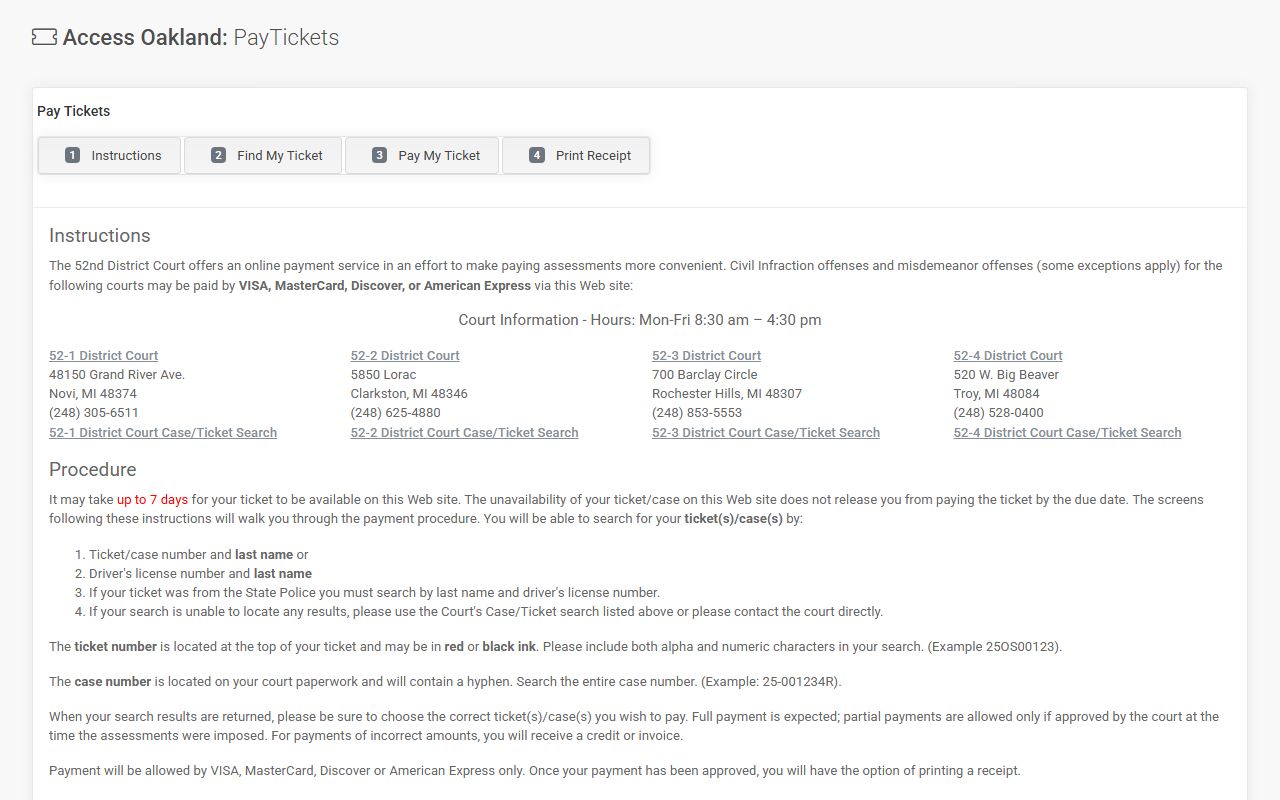
That portal is the official channel for eligible 52nd District Court tickets, and it walks a driver from instructions to receipt. Divisions 52-2, 52-3, and 52-4 also post online hearing request links, while 52-1 handles hearings both in person and by remote technology. Because each division differs, the ticket itself is the guide.
- Read the ticket and confirm the issuing district court and the due date.
- Check whether the offense is eligible for online payment or must be handled in person.
- To contest, use the district court's online hearing request link where one is offered.
- To pay, use an accepted card and expect a service fee added to the total.
- For a mailed or drop-box payment, write the case number and name and never send cash.
Text scam warning. Oakland County district courts warn about text messages that claim to come from the Michigan DMV, and they state the court will never solicit payment through a link in a text message.
Payment rules shift by division. The 52-1 court applies a 3.5% service fee to credit and debit card payments. The 52-2 and 52-3 courts list a 3.5% card fee plus a $2.50 ACH transaction fee. The 52-4 court keeps an after-hours drop box on the left side of the public entrance for tickets or criminal fines and costs, and payment there must be a check or money order made out to 52-4 District Court with the case number and name listed clearly.
Do not pay if you plan to fight it. Paying a civil infraction usually admits responsibility, so contact the court before the due date if a remote appearance, adjournment, or hearing format is unclear.
Public Access Laws for Oakland County Traffic Records
Court records in Michigan are governed by court rules, not by a simple open-records request. The Michigan Freedom of Information Act favors access to records of public bodies, but it does not treat the judiciary as a public body. For a traffic file, the correct route is the district court that owns the case, not a county FOIA request. Access to document images is further limited by court rule, which is why online systems show status but hold back many document copies.
Key Statutes:
Michigan Compiled Laws § 15.232 - defines a public record and excludes the judiciary, including the county clerk acting as circuit-court clerk, from the term public body.
MCR 8.119 - governs court-record access, retention, and the limits on posting document images online.
Oakland County Traffic Records vs State Driver Records
These are two different files with two different owners. The court traffic record is held by the district court and shows the case itself. The state driver record is held by the Michigan Secretary of State and shows a person's driving history, license status, and convictions reported to the state. A dismissed ticket ends the court case, yet a conviction may still post to the driver record with points. Anyone checking a driving history needs the state record, while anyone paying or contesting a ticket needs the court file.
The Secretary of State provides driver records through its official driving record service.
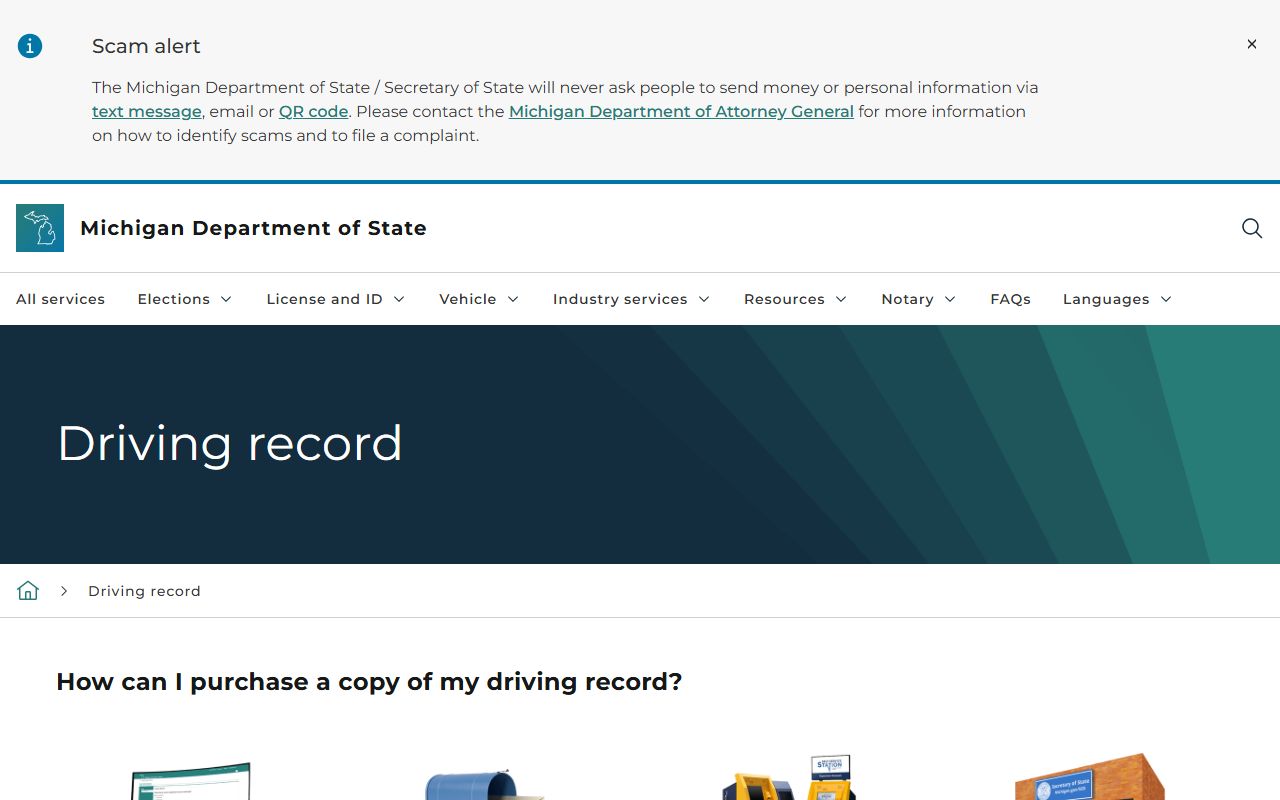
That state record is separate from any Oakland County court file and must be requested on its own. The comparison below lays out where each record lives and how to reach it.
| Point | Court Traffic Record | State Driver Record |
|---|---|---|
| Record source | Oakland County district court that heard the ticket | Michigan Secretary of State |
| What it shows | Citation, charge, hearing, plea, fine, cost, and disposition | Driving history, license status, points, and reported convictions |
| Where to access | District-court clerk, MiCOURT, or the 52nd District payment portal | Secretary of State record-sales and driving-record services |
| How to correct errors | Raise the issue with the district court that entered it | Contact the Secretary of State about a driving-record error |
CDL and Commercial Driver Records
Commercial drivers face stricter rules than most motorists. A ticket that seems minor for a passenger car can threaten a commercial driver license because violations are reported under federal standards. Convictions posted to a Michigan driver record can affect a commercial endorsement and a driver's ability to work. For that reason, commercial drivers should treat every citation seriously and confirm how a plea will land on the state record before resolving it. The Secretary of State sells driver and vehicle records through its business-facing record channels, subject to privacy limits.
DUI and OWI Traffic Cases
Operating while intoxicated is not a routine traffic ticket. Michigan handles OWI and other drunk or drugged driving offenses as criminal matters, so these cases move through the criminal side of the district court and can reach Circuit Court. The record includes arraignment, plea, and sentencing detail well beyond a civil infraction. Several Oakland County district courts also run sobriety and treatment court programs for qualifying drivers.
For the full criminal case file, including charges and sentencing, see the Oakland County criminal court records page.
Failure to Appear and Bench Warrants
Ignoring a ticket can turn a small problem into a larger one. When a driver misses a court date or fails to pay, the file may show a default or a failure to appear. A district-court judge can then issue a bench warrant, and unresolved matters may carry license consequences depending on the violation and the court's action. Bench warrants are best resolved through the court that issued them.
The 52-3 District Court posts walk-in arraignment hours on Monday through Friday from 9:00 to 10:30 a.m. and from 1:00 to 3:00 p.m., and it asks drivers to check in at the Clerk's Office before going to any courtroom. Bringing a government ID and the case or ticket number helps the clerk find the file quickly. Contacting the court or an attorney before appearing is wise when bond or safety questions exist.
Note: Jail release procedures include a LEIN check, so an unresolved traffic bench warrant or hold can delay release even when a person is otherwise cleared.
Crash Reports Are Handled Separately
A crash report is not a ticket and not a driver record. Michigan crash reports are kept through the Michigan State Police, not the district court, and they are ordered on their own path. A driver involved in a collision may need the report for insurance even when no citation was written. The reporting unit answers questions by phone at 517-241-1699 and by email at CrashTCRS@michigan.gov.
The Michigan State Police explains the process on its Traffic Crash Reporting Unit page.
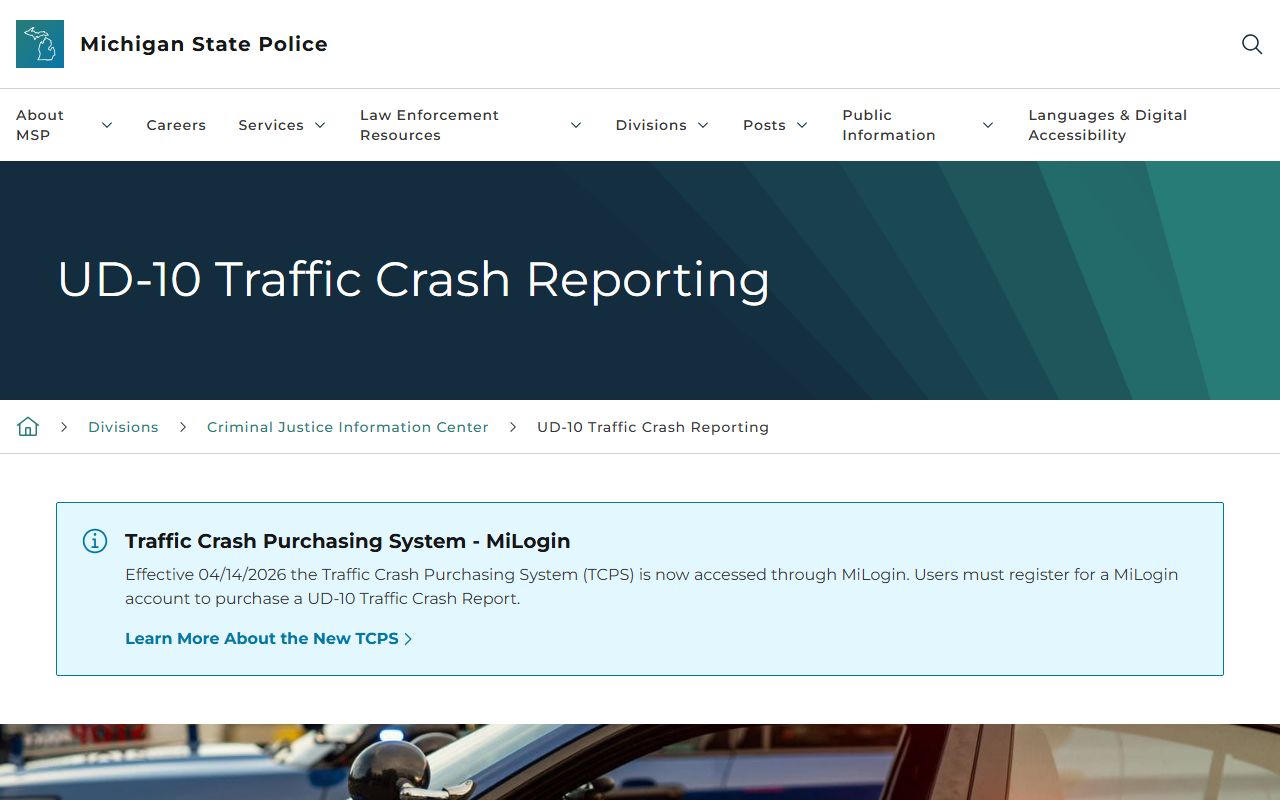
That unit maintains qualifying Michigan crash reports under MCL 257.622, which requires submission of reportable crashes. Reports are purchased online through a separate search system.
The Traffic Crash Purchasing System asks for a driver license number or a case and incident number, plus a date of birth and the date of the crash.
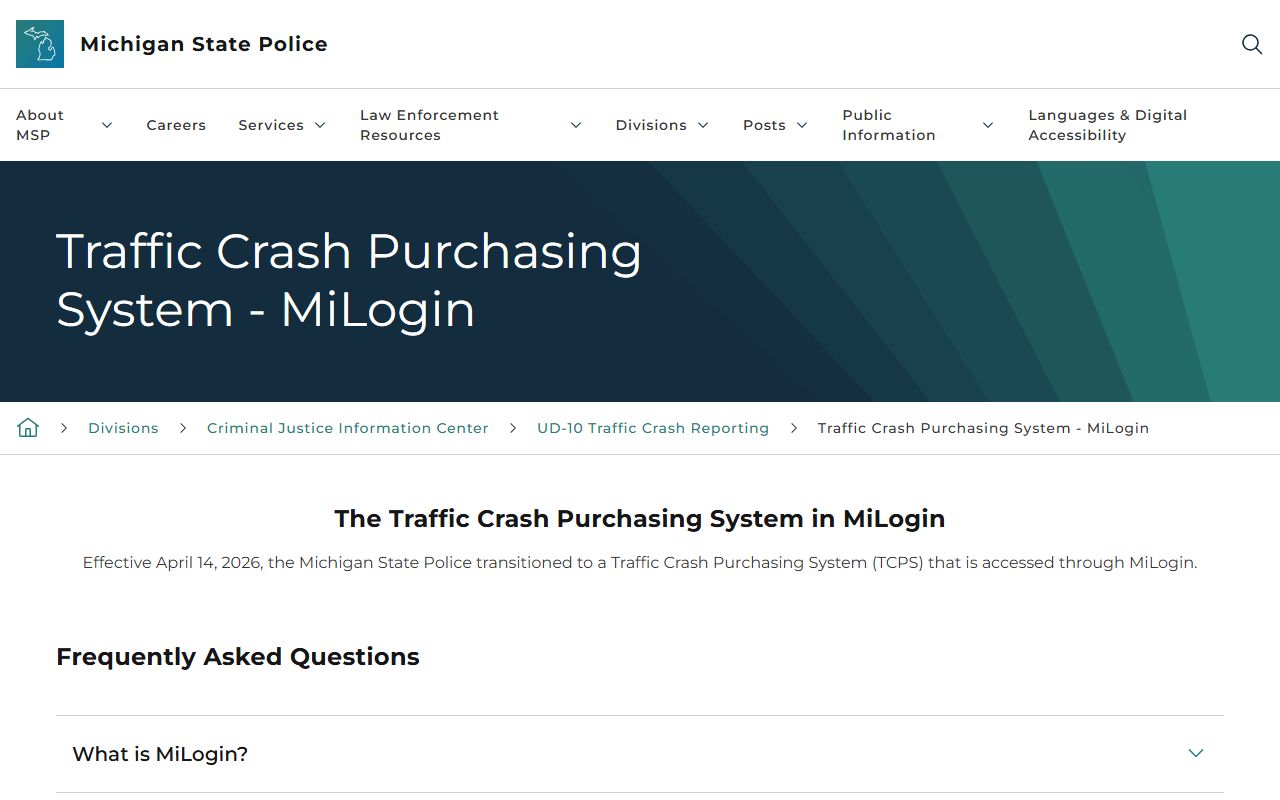
Drivers who lack the required search details are advised to submit a FOIA request to the reporting unit instead. Mailed requests go to the Traffic Crash Reporting Unit, P.O. Box 30634, Lansing, MI 48909-0634.
Setting Aside Oakland County Traffic Convictions
Michigan uses the term set aside for making an eligible conviction nonpublic. Civil infractions are not crimes, so they do not follow the set-aside path, but a misdemeanor traffic conviction may qualify under state law. Eligibility is defined by statute, and an application must be filed in the court where the conviction occurred. A separate application is used for each court involved.
The set-aside process is governed by Michigan Compiled Laws § 780.621, and the state provides an Application to Set Aside Conviction form. Once granted, a set-aside conviction becomes nonpublic for most public-facing searches, though courts and law enforcement may keep access as the statute allows.
Fees for Oakland County Traffic Records
Costs depend on which record a person needs and how it is paid. Online ticket payments add a service fee, while state driver records carry a flat charge. Court copies are priced per page. The Secretary of State lists driver and vehicle record fees on its record-sales page, and those fees are the same whether the request is for a plain or certified record.
The Secretary of State publishes record-sales fees on its record-sales page.
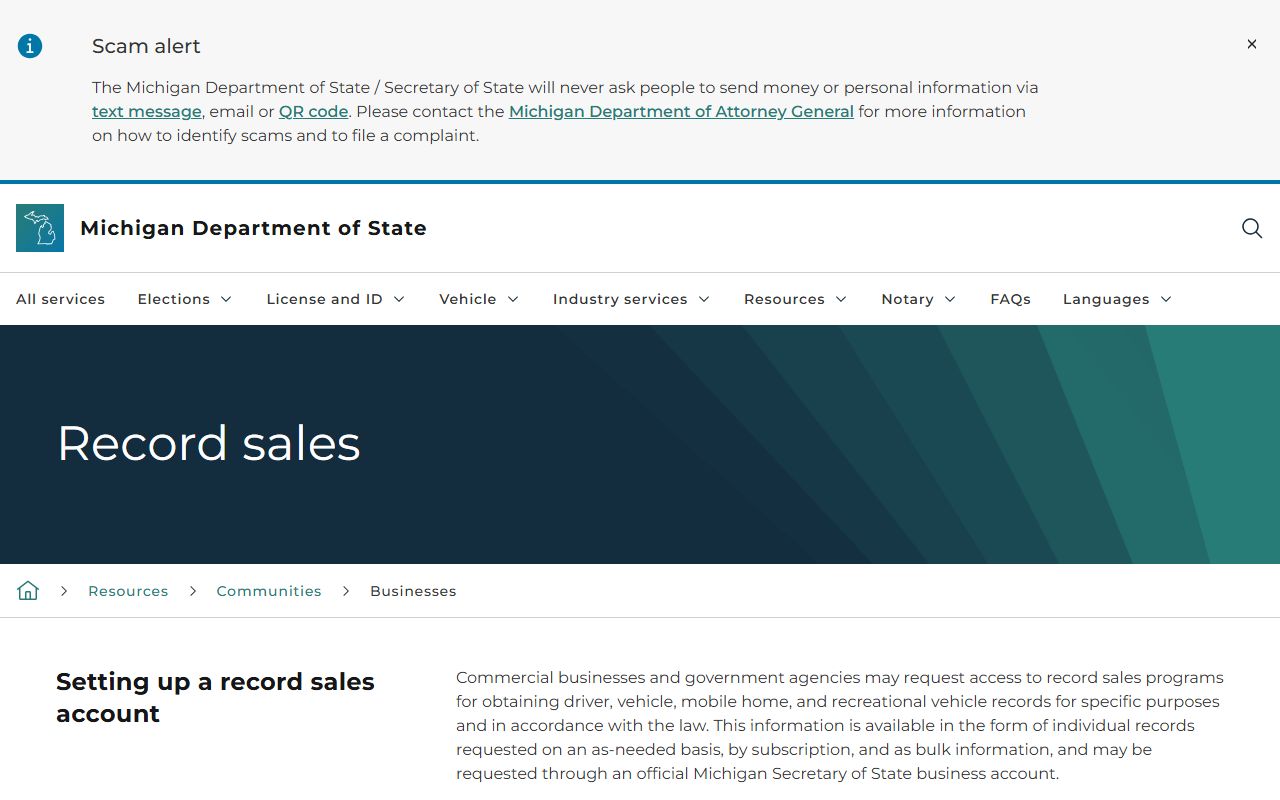
That page confirms the driver-record charge used in the schedule below. Court copy fees are set by the clerk that holds the file, so the district court on a ticket should confirm its own rates.
| Item | Amount |
|---|---|
| Credit or debit card service fee | 3.5% of payment |
| ACH transaction fee (52-2, 52-3) | $2.50 |
| Michigan driver record copy | $15 |
| Michigan certified driver record | $16 |
| Regular photocopy per page (Legal Records) | $1 |
| Certified photocopy (Legal Records) | $10 plus $1 per page |